AstraZeneca
Helping AstraZeneca design the next generation of enterprise AI.
Leading the design of an internal AI assistant used across one of the world's largest pharmaceutical companies. The programme helped employees discover internal knowledge, reports and data more efficiently while establishing safe, responsible ways of introducing AI into everyday work.
The challenge.
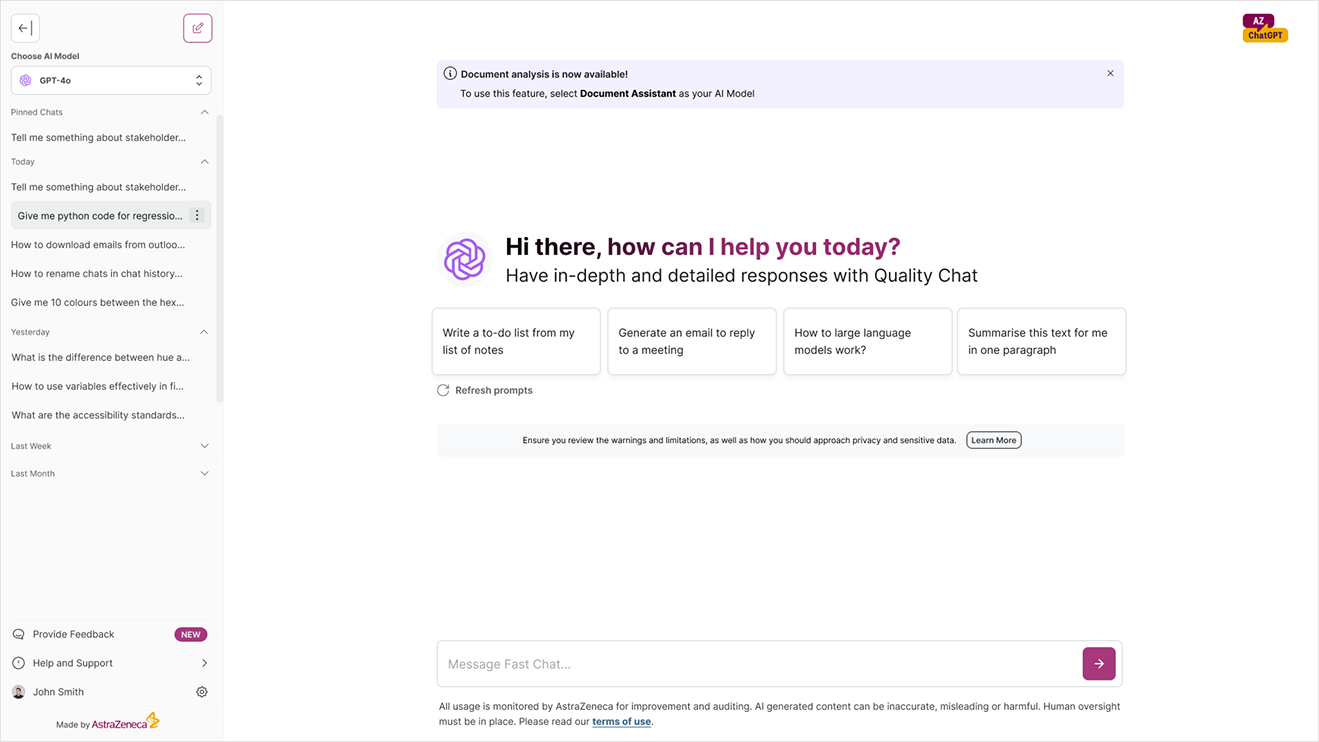
When I joined AstraZeneca, generative AI was evolving almost weekly. New models were appearing, interaction patterns were changing, and there was no established playbook for designing enterprise AI products.
The programme set out to build an internal AI assistant that could help employees discover knowledge, reports and data spread across a complex global organisation. It wasn't intended to replace people or make decisions on their behalf. Instead, it was designed to become an everyday assistant that helped employees find information faster and work more efficiently.
The challenge wasn't simply building the product. It was introducing AI into a highly regulated environment where trust, privacy and responsible use were just as important as the technology itself.
My role was to help turn an emerging technology into something people could understand, trust and confidently use.
Designing AI people could trust.
One of the earliest design decisions wasn't visual—it was language.
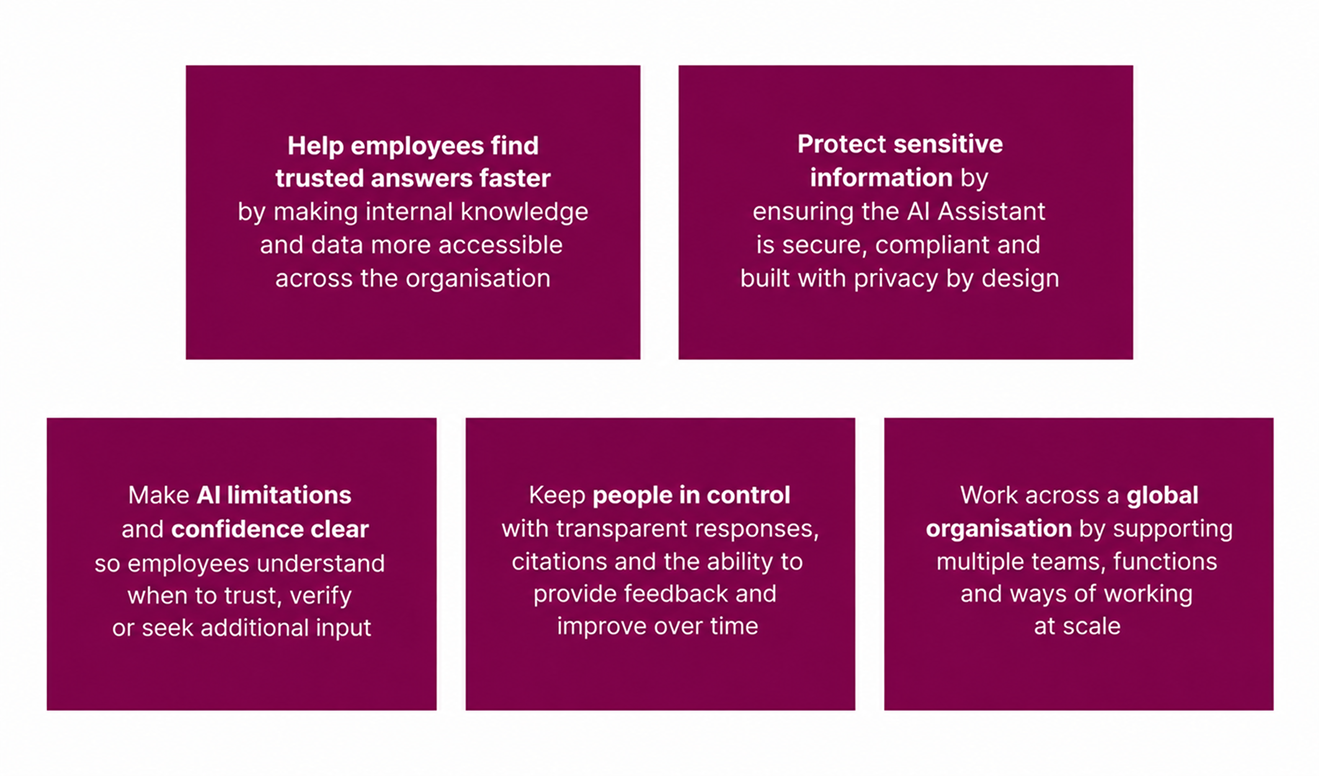
Internally, we deliberately referred to the product as an assistant rather than an AI tool. At the time, AI was often associated with replacing jobs, creating uncertainty across organisations. Positioning it as an assistant helped reinforce that it existed to support people, not replace them.
Designing trust became just as important as designing the interactions themselves.
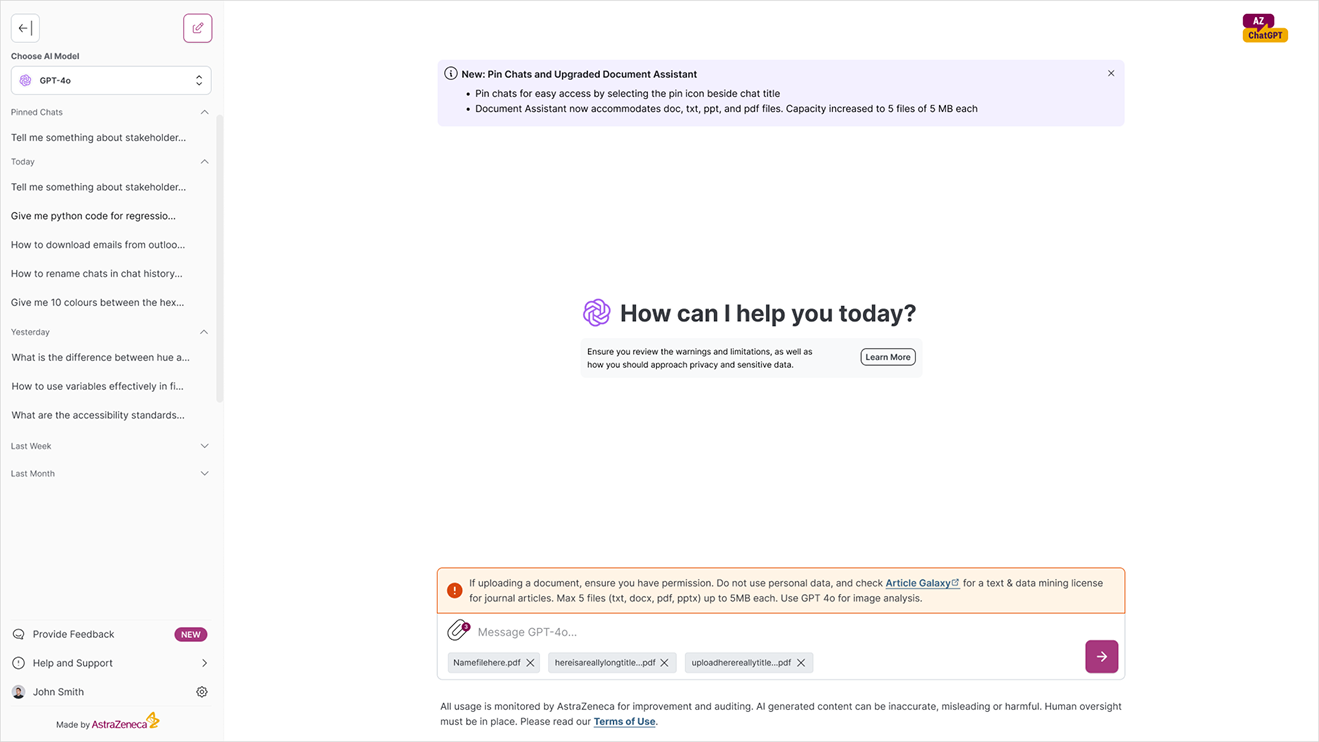
Users needed clear guidance about what the assistant could do, where its limitations were and when human judgement was still essential. We introduced warnings around sensitive information, encouraged users to validate responses and designed interactions that reinforced the assistant as a starting point rather than a source of absolute truth.
Helping people feel comfortable using AI became one of the biggest design challenges of the programme.
Leading the programme.
I joined several months into the programme, taking over responsibility for design at a point where delivery was already underway. The engineering team was moving quickly and stakeholder expectations continued to grow as interest in AI accelerated.
As the sole designer across a large multidisciplinary team, my role extended far beyond interface design. I led discovery, service design, interaction design, conversation design, workshops, stakeholder engagement and product strategy, while ensuring design work remained aligned with engineering delivery.
A significant part of the role involved creating clarity. AI capabilities were evolving rapidly, stakeholder priorities regularly shifted and delivery plans needed constant adjustment. Prototypes became an important communication tool, helping teams understand complex ideas, align on direction and make informed decisions before development began.
Rather than trying to keep pace with changing technology, the goal was to create a product flexible enough to evolve alongside it.
Designing the experience.
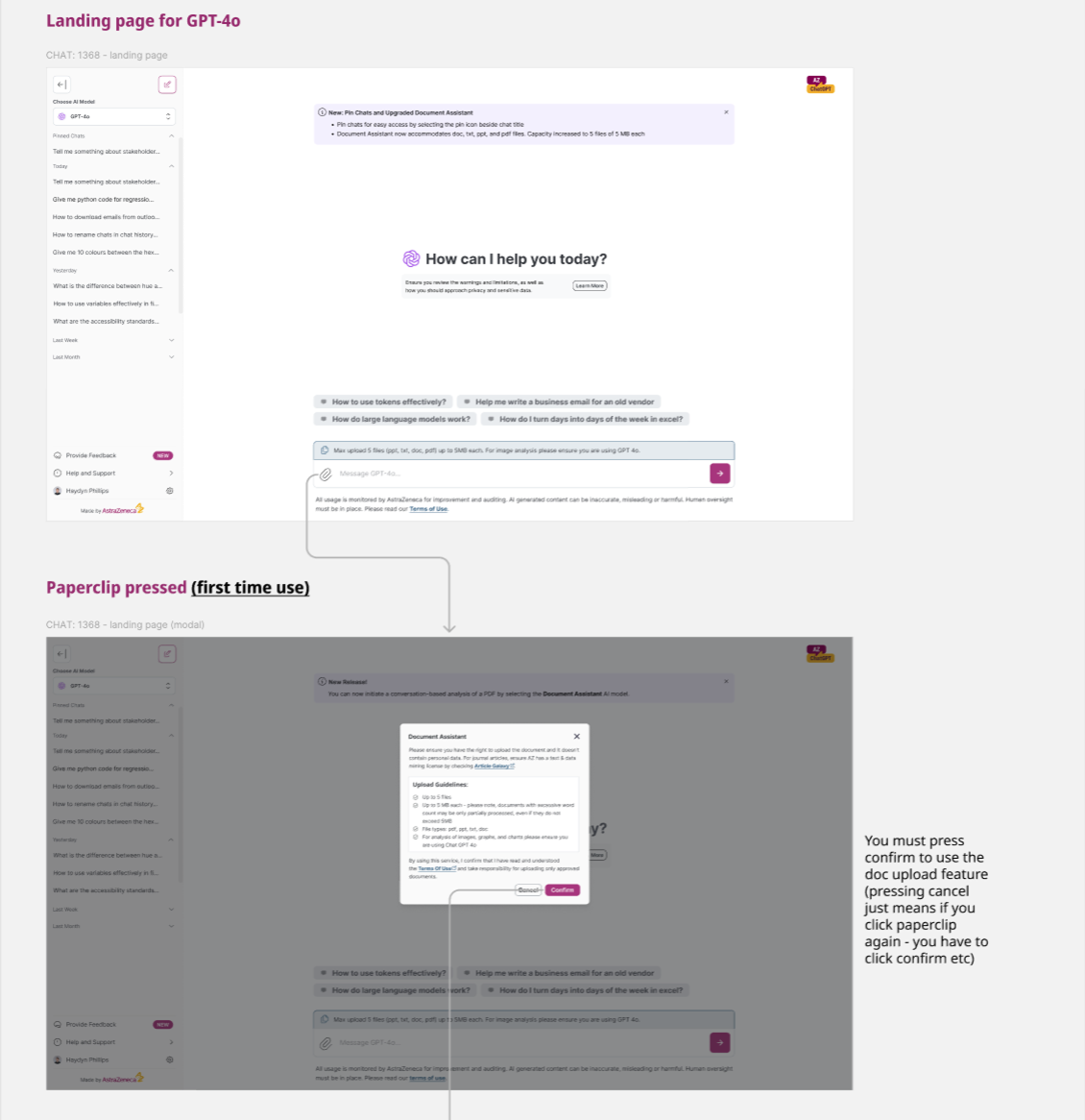
The assistant became a new way for employees to access knowledge across AstraZeneca.
Rather than simply returning search results, it helped employees discover reports, documents and information through natural conversations that felt familiar while remaining appropriate for an enterprise environment.
The work included:
- Conversation and interaction design.
- Prompt and response patterns.
- Information architecture.
- Service design across multiple user journeys.
- Prototypes for testing and stakeholder engagement.
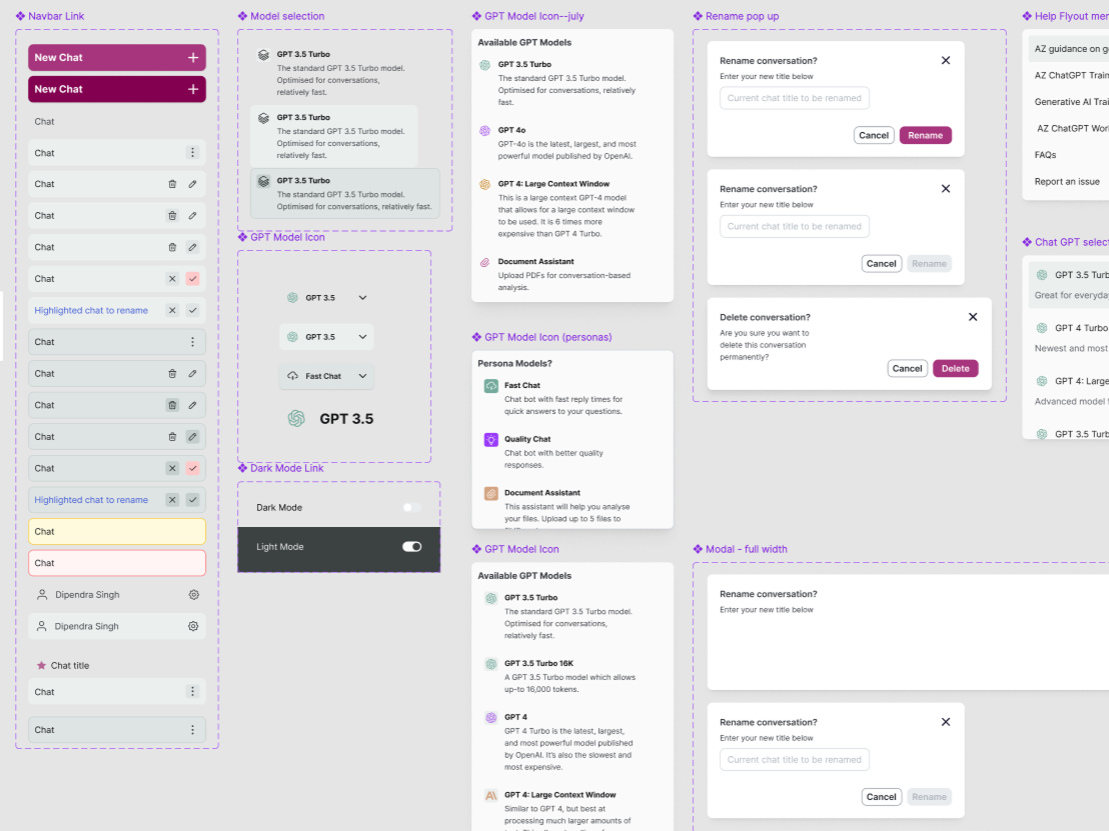
- Design systems and reusable interaction patterns.
- Roadmaps aligning design with engineering delivery.
Throughout the programme, the experience continued to evolve as AI itself matured. New interaction patterns emerged, user expectations changed and the product adapted alongside both.
Outcomes.
The biggest achievement wasn't building an AI assistant.
It was helping establish how enterprise AI could be introduced responsibly within a global organisation.
The programme delivered:
- A scalable interaction model for enterprise AI.
- A shared design direction across product and engineering.
- Prototypes supporting stakeholder alignment and delivery.
- Design patterns for trustworthy AI interactions.
- Improved access to internal knowledge and information.
- Strong foundations for future AI products across the organisation.
Perhaps the biggest outcome wasn't technical. It was helping people see AI as something that could support their work rather than threaten it.
Looking back.
This project taught me that designing AI isn't really about technology.
It's about designing confidence.
The technology will continue to evolve, but people will always need to understand when to trust it, when to question it and how it fits into their everyday work.
Looking back, I'm proudest of helping remove some of the fear surrounding AI. By framing it as an assistant, designing appropriate safeguards and keeping people at the centre of every decision, we helped introduce a technology that initially felt uncertain in a way that felt practical and approachable.
The biggest lesson I've carried into every AI project since is simple.
The challenge isn't getting people to use AI.
It's helping them feel confident working alongside it.