Department for Work and Pensions
Building a community around DWP's design system.
Leading discovery and engagement for DWP's first design system, helping teams prioritise shared needs, improve contribution and see the system as a product owned by the wider design community.
The challenge.
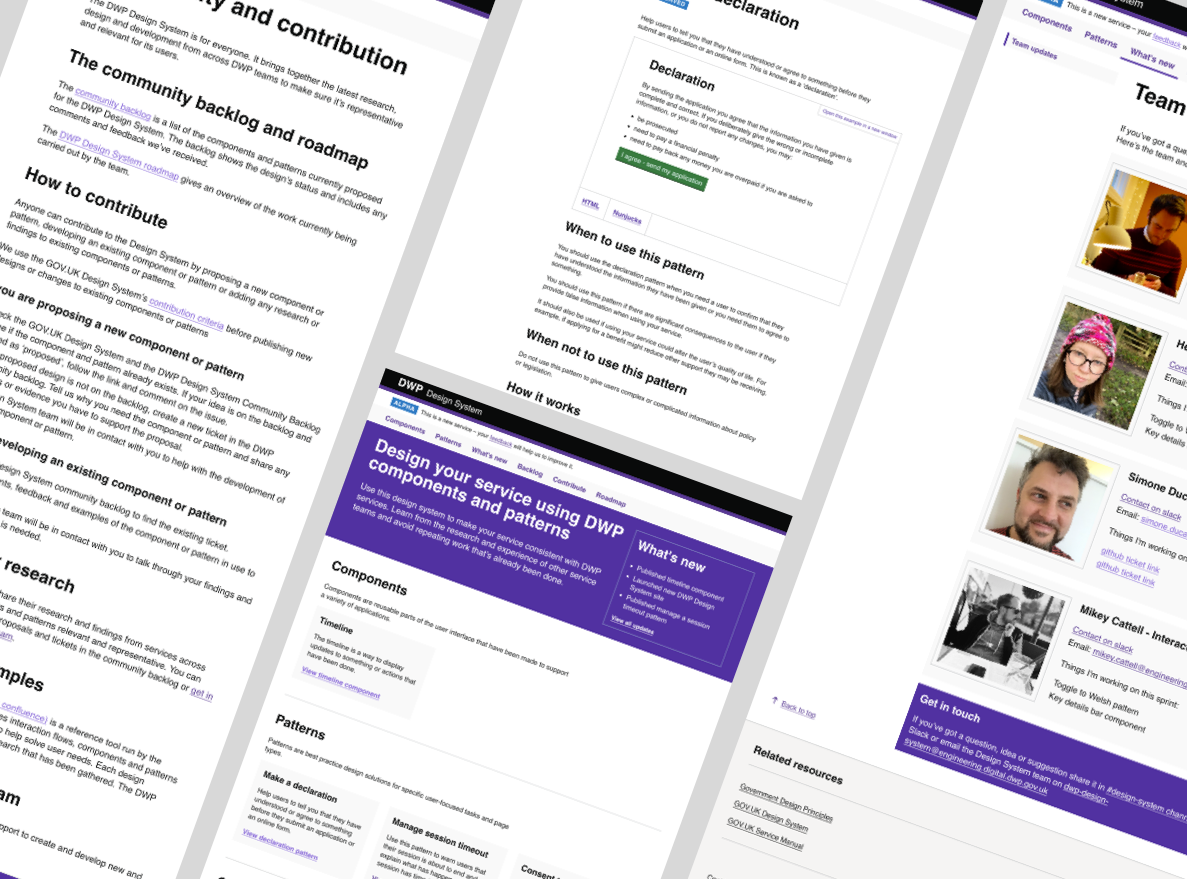
DWP had grown significantly, with designers, researchers, content specialists and engineers working across a large number of services and locations.
Teams had created and shared patterns for several years, but the work was distributed across different platforms. Designers were often unsure which guidance already existed, which patterns they could trust or how they should contribute improvements.
The design system needed to make it easier for teams to find, use and share the patterns required to build consistent and accessible services.
But the challenge was larger than creating a library of reusable components.
It needed a clear purpose, a useful contribution model and an active community around it.
Giving the system a direction.
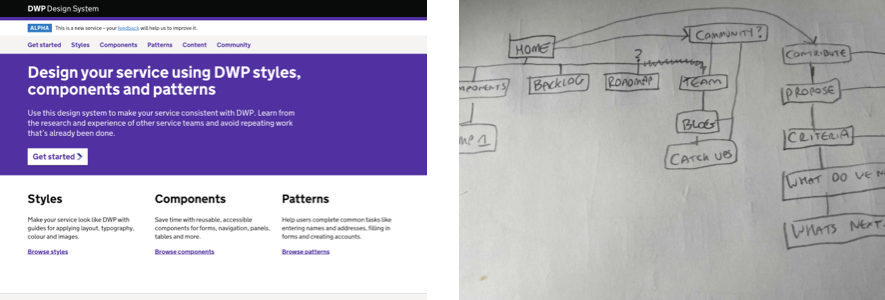
I joined as the team's first interaction designer and began by reviewing its purpose, priorities and relationship with the wider DWP community.
The existing backlog contained duplicated requests, assumptions and ideas supported by very different levels of evidence. Before increasing delivery, the team needed a clearer understanding of its users, their needs and what success should look like.
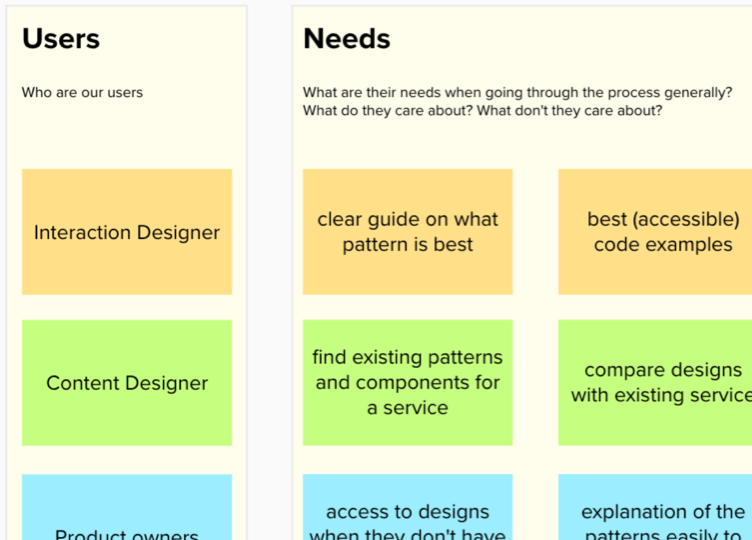
I facilitated a collaborative discovery session that brought the backlog, user needs and future opportunities together in one place.
We grouped related work and distinguished between:
- Needs supported by research or existing feedback.
- Requests raised through community discussion and GitHub issues.
- Patterns that could be released experimentally.
- Items requiring further user research.
- Technical improvements that could reduce debt and improve the website.
After prioritising the work together, I introduced a now, next and later structure. This gave the team a more manageable plan and a clearer way to explain decisions to the wider organisation.
Building community ownership.
A design system cannot be sustained by a central team working alone.
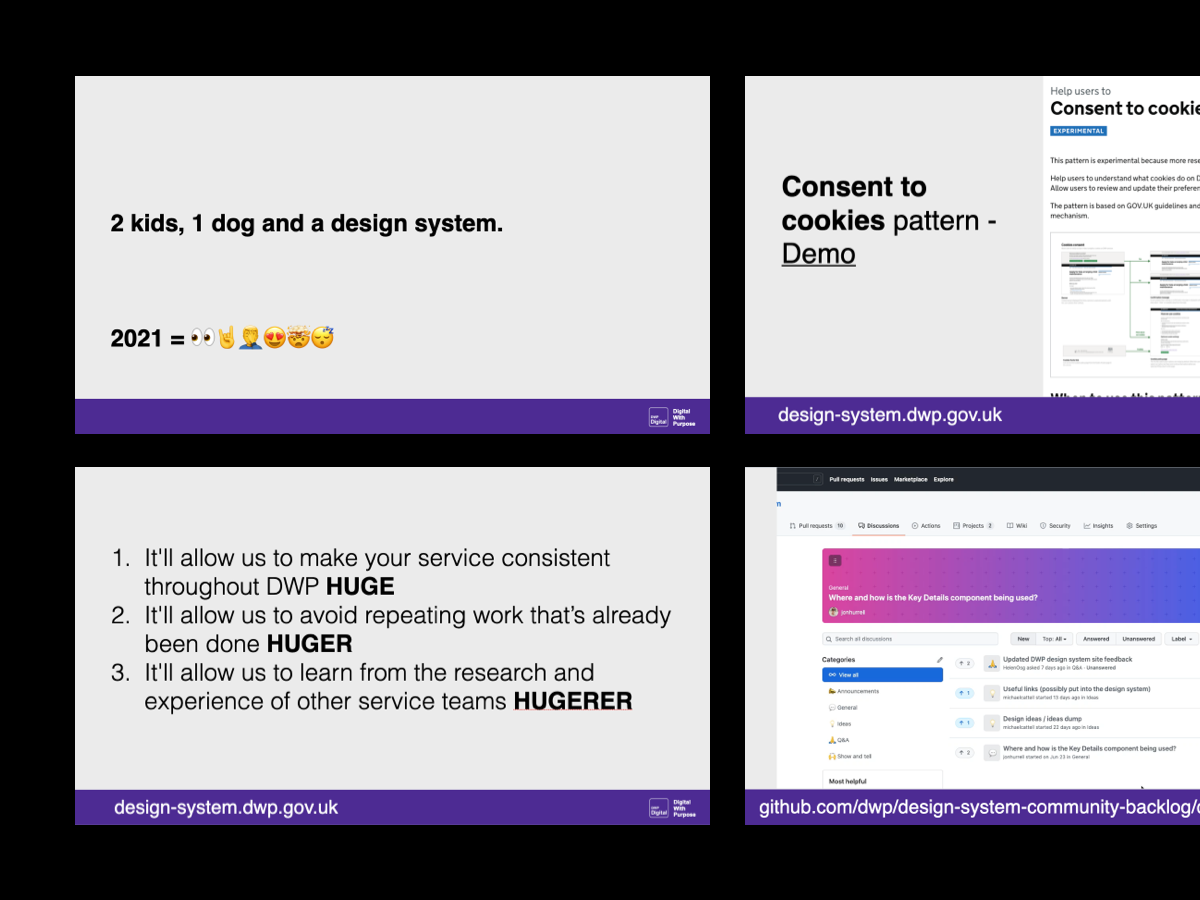
I presented the team's purpose, current work and future priorities to an internal community of around 100 people. Rather than presenting a finished solution, I was open about the challenges the team faced and where we needed help.
The central message was that the design system did not belong to the design-system team.
Our role was to bring the pieces together, provide structure and help the wider community improve the patterns used across DWP services.
That transparency prompted questions, ideas and direct conversations from teams across the organisation. It also gave the community clearer evidence that their feedback could influence priorities and contribute to the system's direction.
Designing for contribution.
The existing contribution model was not generating enough meaningful participation.
Rather than assuming that people were unwilling to contribute, I began exploring whether the process itself was asking too much, happening too late or failing to show people the value of getting involved.
I introduced and trialled several lower-friction ways for teams to engage:
- Office hours for sharing progress and explaining recent decisions.
- Power hours where teams could bring patterns and problems for open discussion.
- Brown-bag sessions for deeper, optional exploration of individual patterns.
- Community surveys to understand adoption, usability and unmet needs.
- Cross-team workshops connecting services, disciplines and locations.
This repositioned contribution as an ongoing collaboration rather than a formal handover into a central team.
It also helped the team understand that increasing adoption depended on education, engagement and trust as much as documentation or code.
Outcomes.
This case study covered the first phase of an ongoing product rather than a finished design system.
The work established:
- A clearer purpose and direction for the design-system team.
- A prioritised backlog connected to user and community needs.
- A shared now, next and later plan for future delivery.
- Greater visibility across the DWP design community.
- New formats for education, engagement and contribution.
- A clearer distinction between experimental and established patterns.
- Stronger alignment between research, design, technology and community priorities.
- Early DWP work progressing towards the wider GOV.UK pattern library.
Most importantly, the team began moving away from treating the design system as something produced centrally and towards seeing it as a shared organisational product.
Looking back.
This work reinforced that every design system needs a clear strategy and purpose, but those things cannot be defined by the central team in isolation.
Teams need to understand why the system exists, how it helps their work and how they can influence its direction. Without that shared ownership, a design system can quickly become a style guide maintained by one person or a small group.
The role of the design-system team is not to own every answer. It is to create the structure, confidence and shared purpose that allow a community to develop those answers together.
The lesson I carried forward was simple:
A design system scales through contribution, not control.