Financial Conduct Authority
Helping establish the foundations for digital delivery at the Financial Conduct Authority.
Leading the FCA's first enterprise design system while helping establish more consistent, accessible and scalable digital delivery across the organisation. The work focused on improving design maturity, introducing shared ways of working and bringing teams together around a common approach to building digital services.
The challenge.
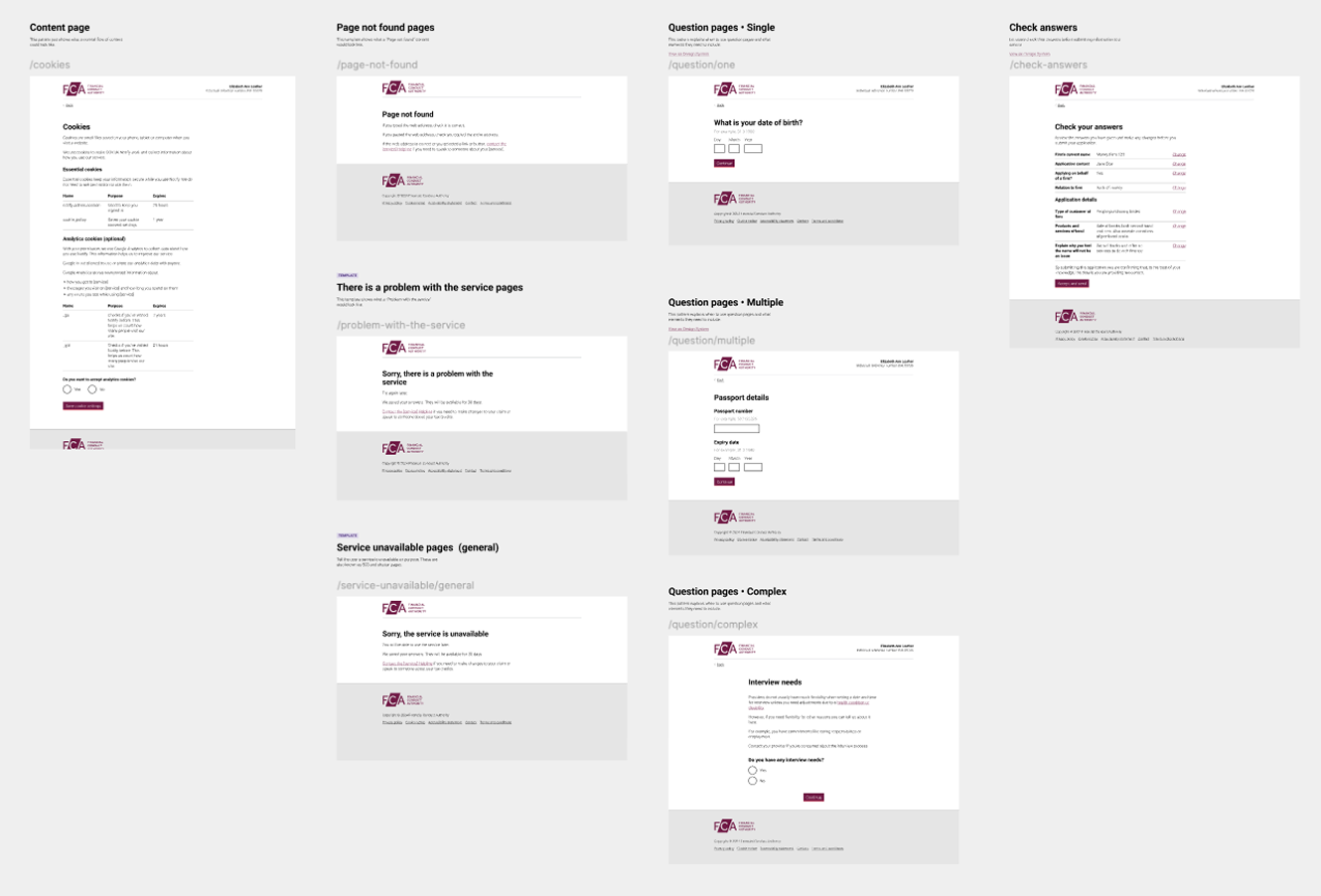
Due to its rapid growth in digital capability, teams had naturally evolved their own ways of designing and delivering products. As a result, services looked and behaved differently, components were recreated multiple times and there was no shared foundation for designers or engineers to work from.
Users moving between FCA services often experienced completely different interfaces, interaction patterns and language, reducing their confidence and creating unnecessary friction. Forms also varied in quality, with accessibility, readability and completion rates suffering because common standards simply didn't exist.
Internally, designers largely worked in isolation with little consistency across teams. Delivery was largely driven by engineering priorities, with each product team solving similar problems independently. The result was duplicated effort, inconsistent user experiences and no shared approach to designing or building digital services.
The wider programme recognised these challenges and set out to establish a more mature, enterprise approach to digital delivery through improved governance, common standards and stronger collaboration across teams. This aligned with the programme's objective of creating an enterprise-ready model for digital delivery across the FCA.
My role was to help turn that vision into something people would actually use.
Leading change.
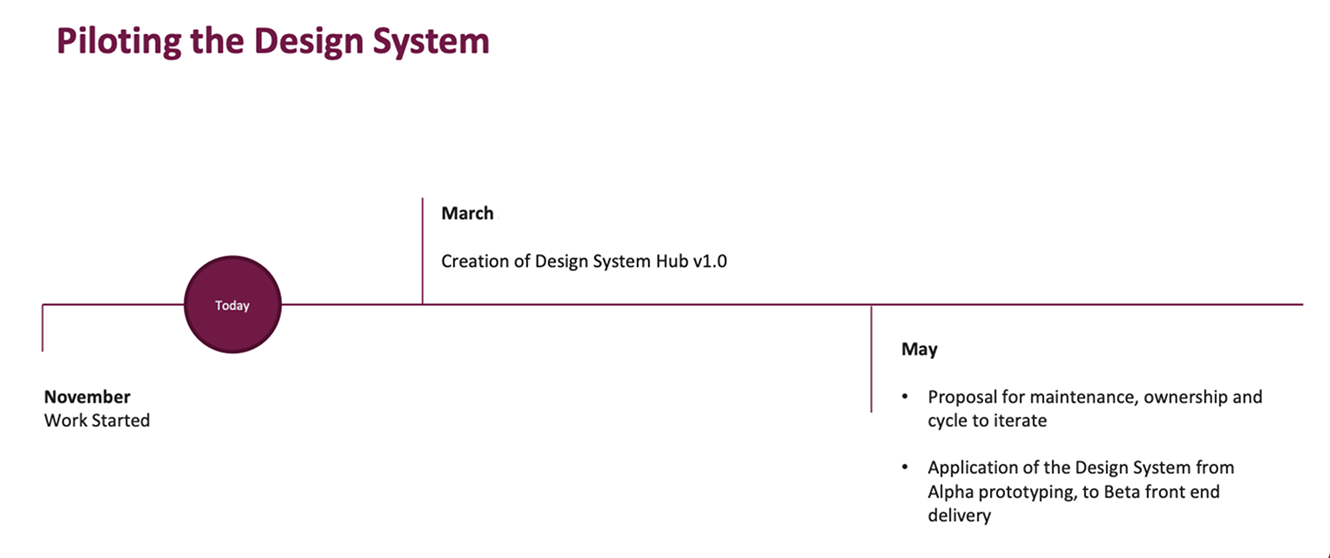
Although I joined to create the FCA's first enterprise design system, it quickly became clear that the real challenge wasn't producing components – it was creating the conditions for adoption.
Before designing solutions, I spent time understanding how teams already worked. Through workshops, design reviews and conversations with designers and engineers, I identified where teams were duplicating effort and what would make a shared system genuinely useful.
Alongside the design work, I regularly presented progress across the organisation and worked with senior leaders to communicate the vision. Rather than talking about components or Figma libraries, conversations focused on reducing duplication, improving accessibility and helping teams deliver better products.
To support adoption, I introduced Design Champions across delivery teams. Rather than relying on a central design team, these champions became local advocates who gathered feedback and helped embed new ways of working.
Designing the foundations.
The design system was never intended to be a collection of UI components.
It was designed as the foundation for how products would be created across the organisation.
The work established a shared design language that balanced consistency with flexibility, allowing teams to solve user problems without repeatedly reinventing common interactions.
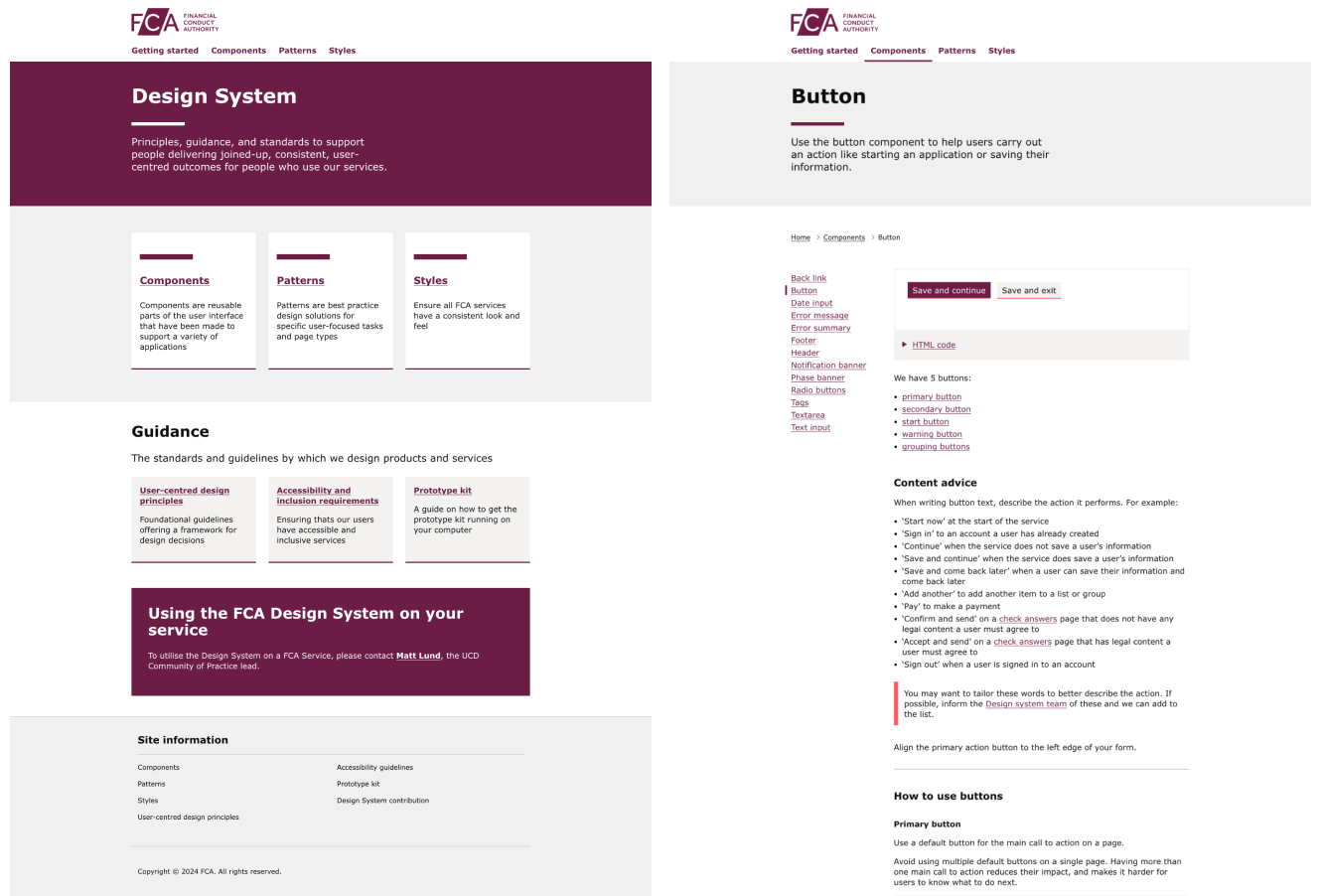
The system included:
- Shared design principles to guide decision-making.
- Accessible UI components built around reusable patterns.
- Figma libraries and prototype tooling.
- Documentation to support both designers and engineers.
- Governance and contribution models for long-term sustainability.
- Reusable interaction patterns for common user journeys.
I spent time understanding existing workflows, identifying duplication between products and learning where current processes created friction for designers and developers.
The objective wasn't to remove creativity.
It was to remove unnecessary variation.
By standardising common interactions, teams could spend more time solving meaningful user problems instead of rebuilding familiar components.
Adoption was designed to be collaborative. Workshops gave teams opportunities to shape the system, challenge decisions and influence its direction. Rather than rolling out a finished framework, people helped build it, creating genuine ownership across the organisation.
Outcomes.
The biggest achievement wasn't publishing a component library—it was building confidence across the organisation that a shared approach could improve both delivery and user experience.
Although the original roadmap anticipated a much longer adoption period, strong engagement across teams meant many activities were introduced significantly earlier than planned, accelerating the rollout of the new foundations.
The programme delivered:
- The FCA's first enterprise design system.
- Shared design principles.
- Reusable components, patterns and prototype tooling.
- Governance and contribution models.
- Design Champions embedded across delivery teams.
- Improved collaboration between design, engineering and product.
- Stronger accessibility foundations.
- Faster prototyping through reusable assets and shared tooling.
Perhaps the biggest outcome wasn't technical—it was cultural. What began as a significant organisational change became part of everyday delivery, with teams adopting the design system because they understood the value it created.
Looking back.
Looking back, I'm proudest of the conversations as much as the components.
Creating a design system is a design challenge.
Helping an organisation believe in one is a people challenge.
This project reinforced how important communication, collaboration and trust are when introducing change at scale. Presentations, workshops and open discussions proved just as valuable as the design work itself, helping teams understand that the design system existed to support creativity rather than restrict it.
Introducing Design Champions was one of the most rewarding parts of the project. Giving people ownership within their own teams created momentum that a centralised approach alone would never have achieved.
Looking back, I'd involve engineers even earlier to generate faster feedback and build momentum from day one. That experience reinforced something I've carried into every design system since: the technical solution is only half the challenge. The real work is helping people believe it's worth adopting.
A design system isn't successful because it exists.
It's successful because people choose to use it.