Sky Sports
Designing a game people wanted to keep playing.
Evolving one of the UK's biggest free-to-play sports games through research, experimentation and multiple product releases, improving the connection between Super 6 and Soccer Saturday while giving players more reasons to return.
The challenge.
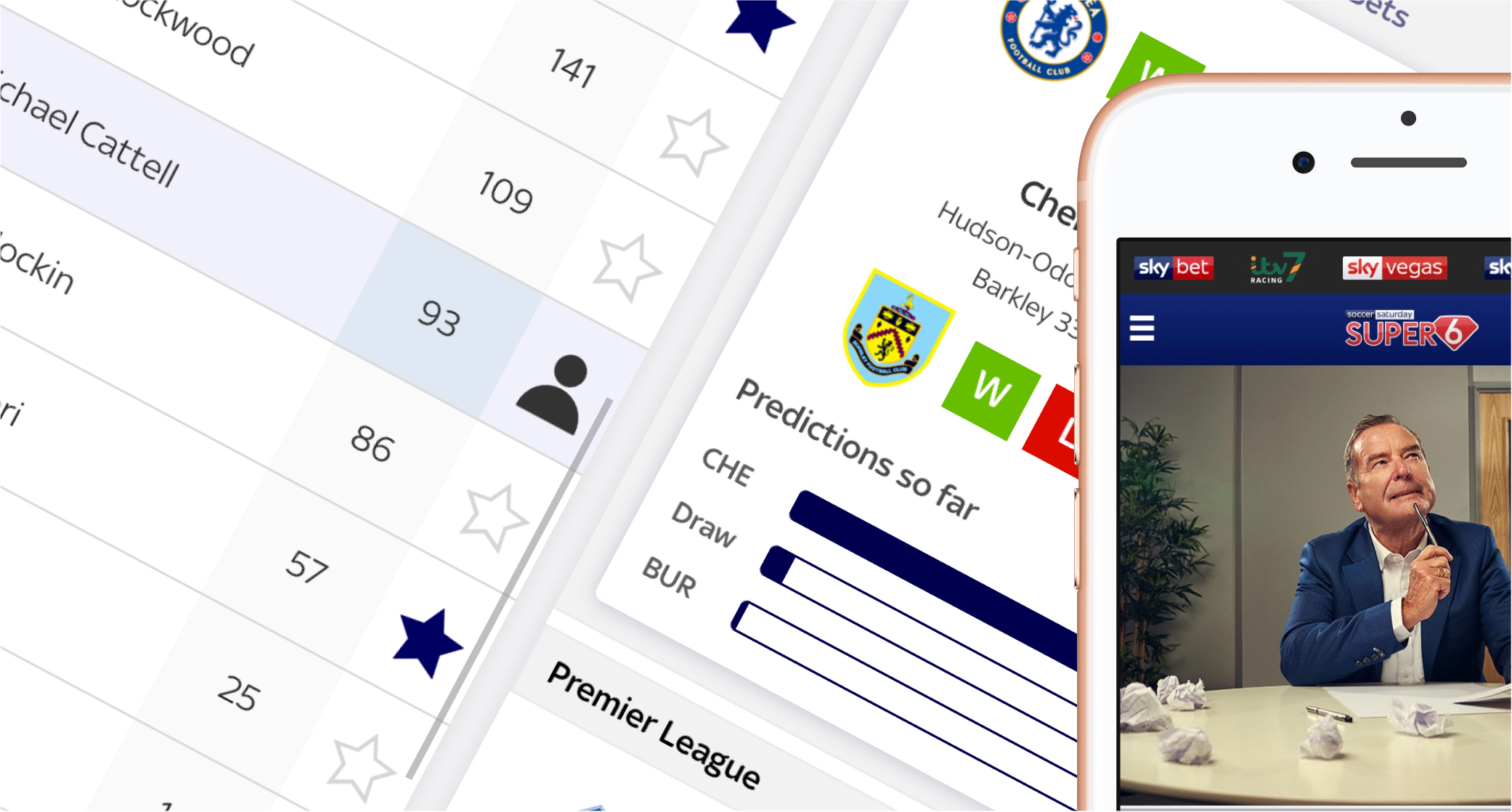
Super 6 gives football fans the chance to predict the scores of six matches and win a weekly cash prize.
It was already a popular free-to-play game, but the experience did not feel as connected to Sky Sports or Soccer Saturday as it could. Players also struggled to find information they needed while making predictions or checking results.
Research showed that people were leaving the product to look up team form, previous scores and other information. Navigation was unclear, some features were difficult to understand, and parts of the experience felt separate from the television programme that made the game distinctive.
The opportunity was not simply to refresh the interface. We needed to make the game easier to understand, give players more useful information and create stronger reasons to return throughout the football season.
Understanding players.
Before moving into detailed design, I worked closely with a user researcher to understand where existing players struggled and what motivated them to return.
We combined moderated research sessions with onsite feedback and surveys. Participants included regular Super 6 players, people who had used Head-to-Head and players who did not understand the feature at all.
The research identified several recurring problems:
- Players did not always know whether they had entered Head-to-Head.
- The scoring system and win state were unclear.
- Many people did not realise there was a separate prize for beating Jeff Stelling.
- Prize winners were mainly promoted through social media, excluding players who did not use those channels.
- People struggled to find the route into Head-to-Head.
- Players who did not watch Soccer Saturday could not understand the feature from its name alone.
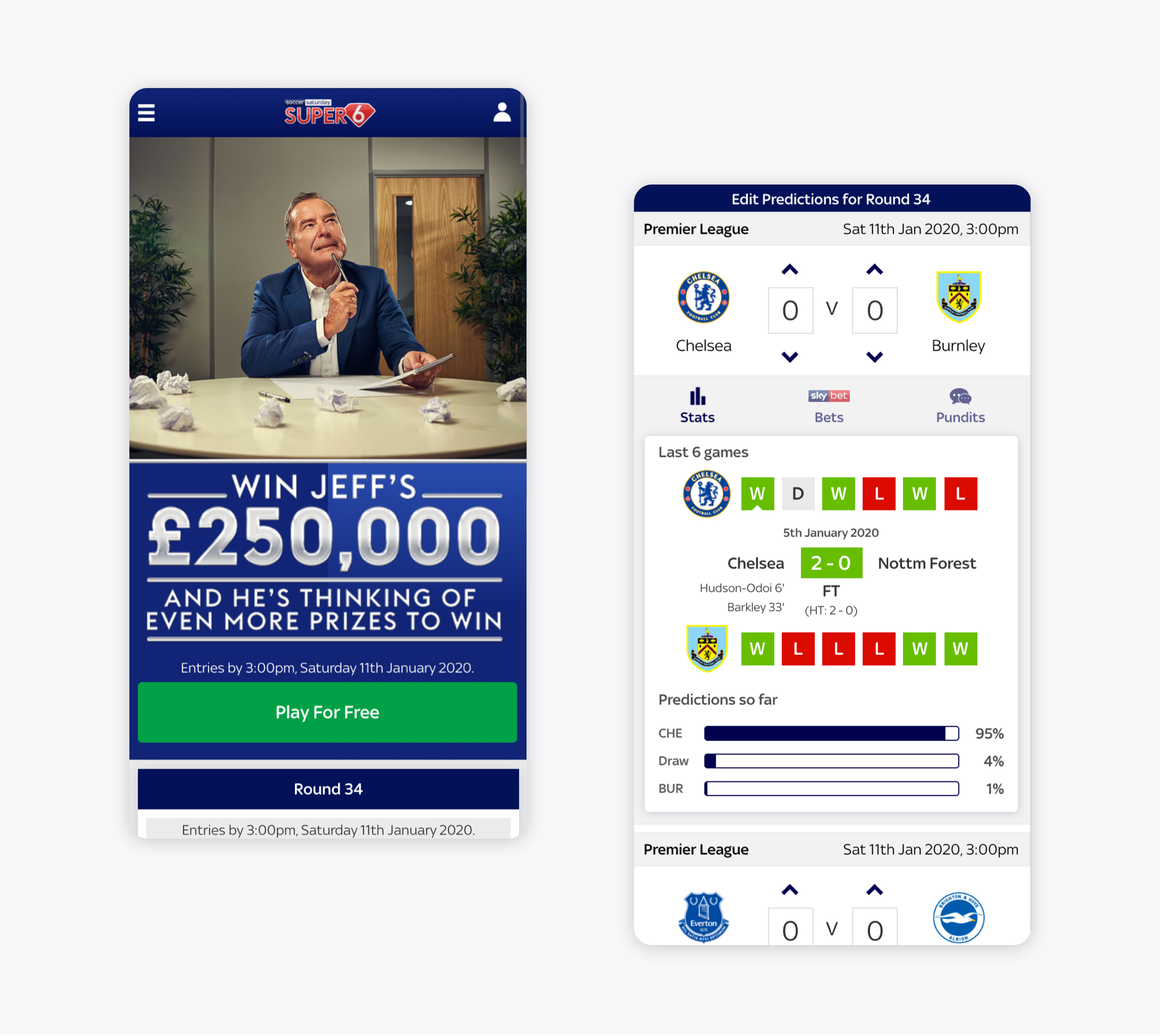
- People left the app to find team form, results and other supporting information.
This gave us a clearer picture of the product as part of a wider match-day behaviour, rather than a form people completed once and forgot about.
Designing the experience.
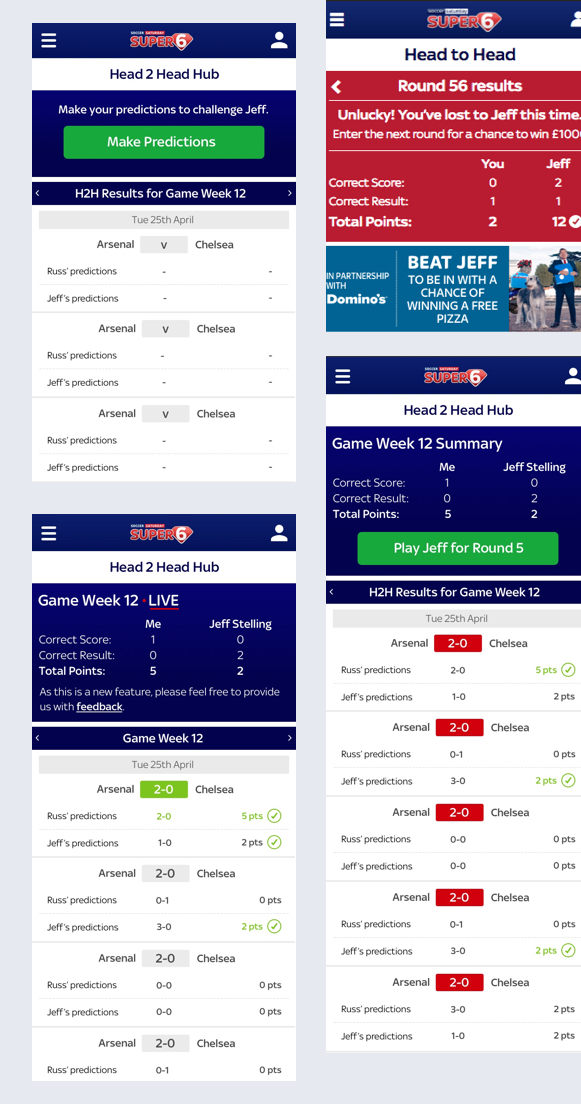
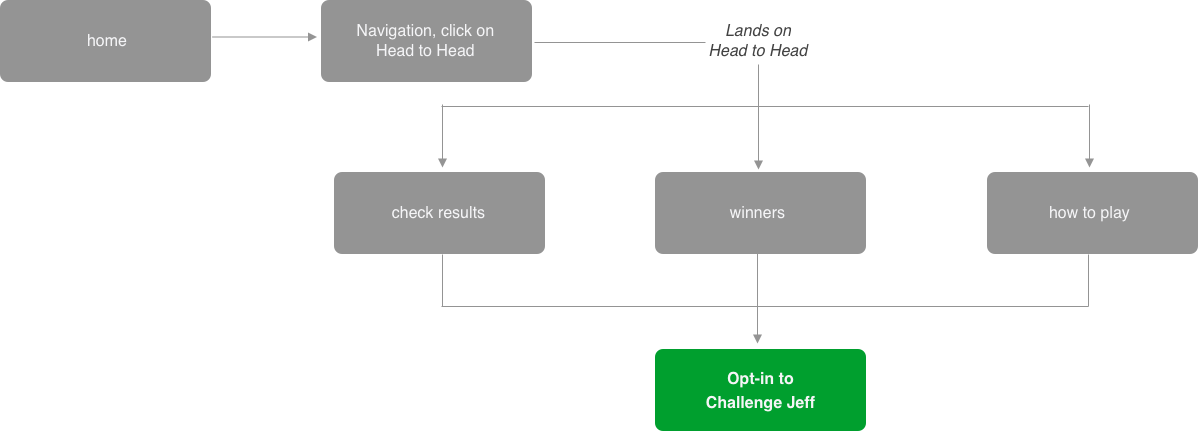
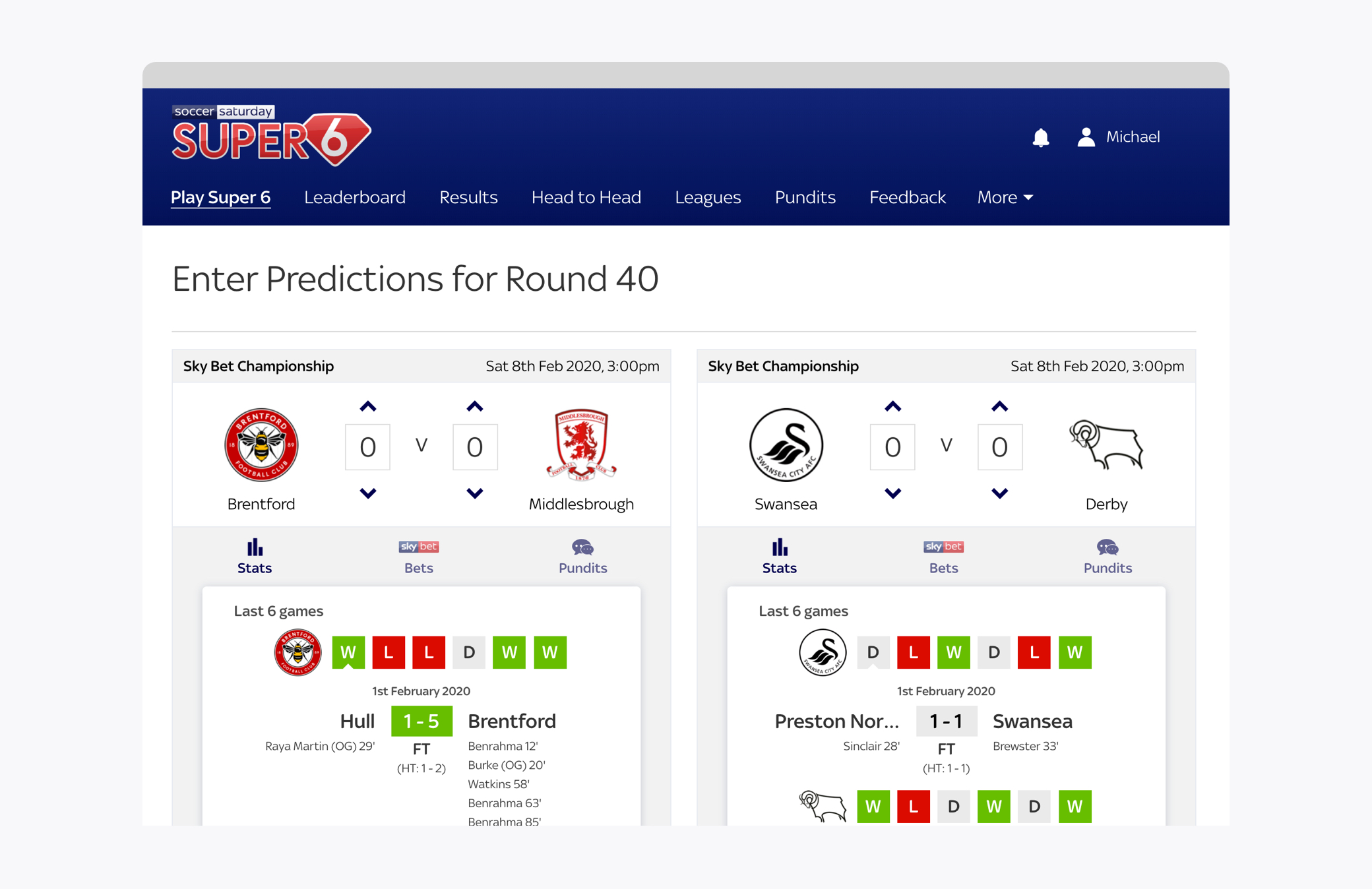
We mapped the journeys players moved between before, during and after the matches. These included entering predictions, opting into Head-to-Head, checking live results, understanding prizes, seeing previous winners and comparing their predictions with Jeff's.
The experience needed to support quick entry while also giving interested players enough information to understand the game fully.
I simplified the structure around three clear areas:
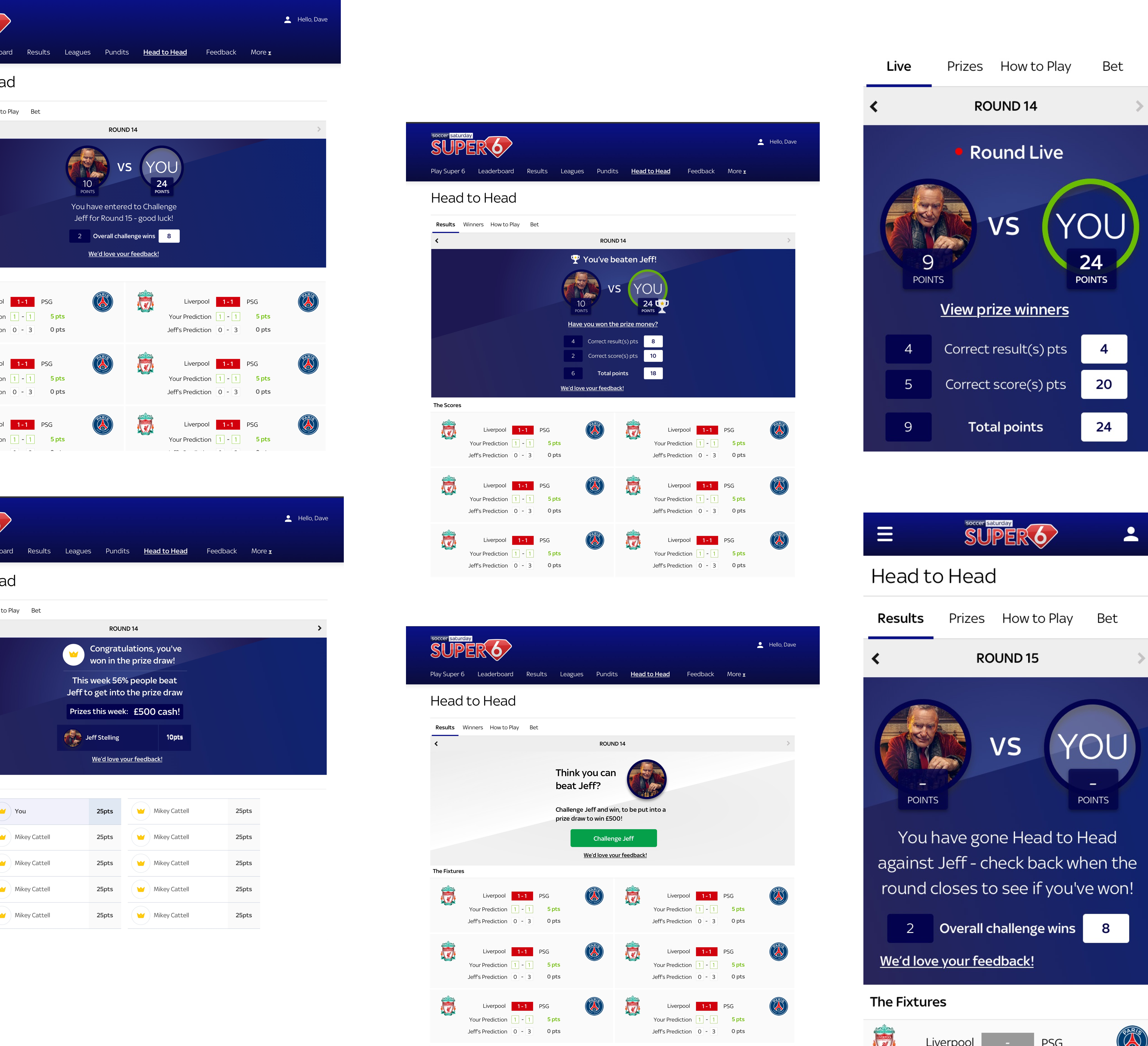
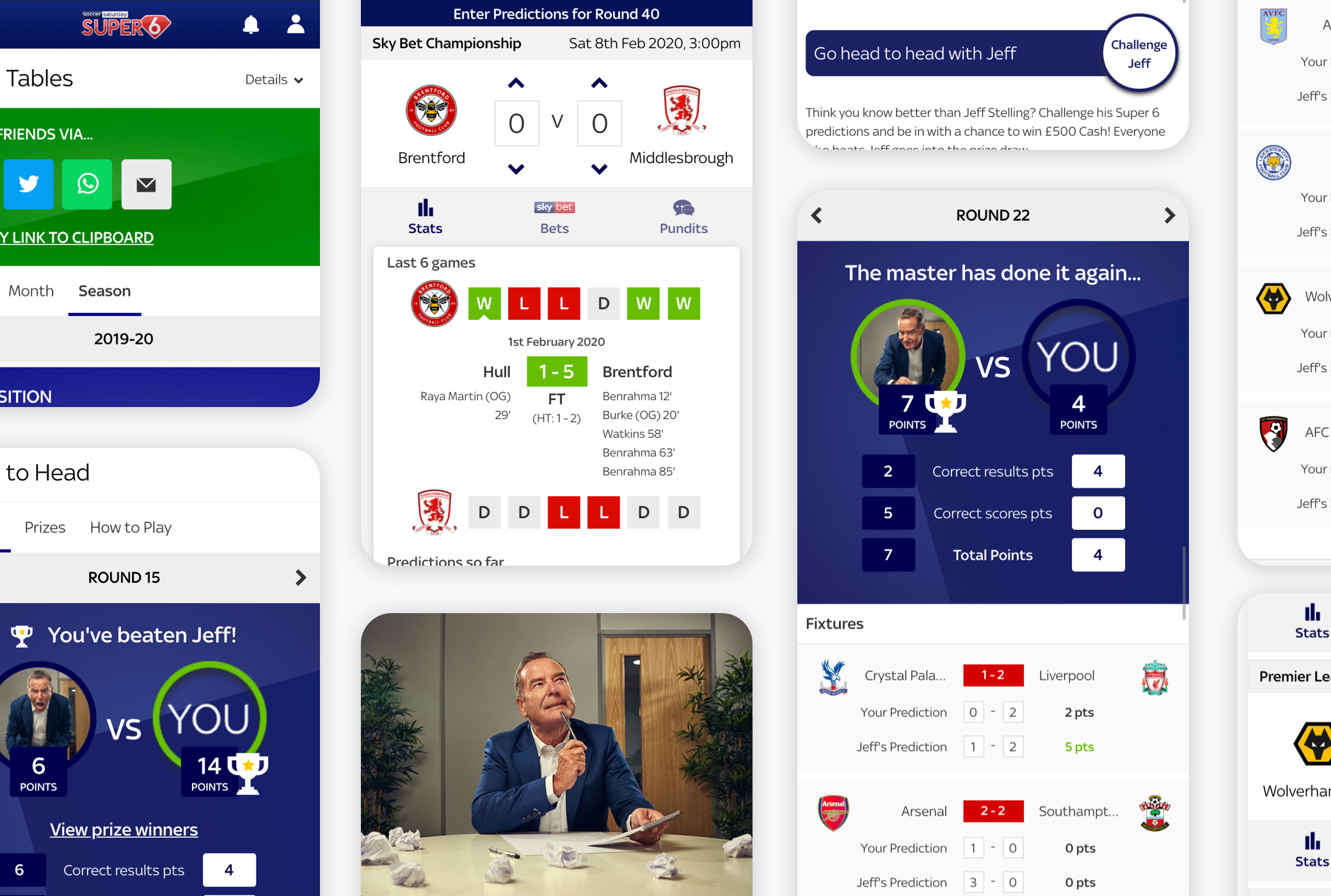
- Results — showing progress, scoring and whether the player had beaten Jeff.
- Prizes — explaining what could be won and making winners more visible.
- How to play — giving new and unfamiliar players a simple explanation of Head-to-Head.
Players could move between these areas without losing their place, while the option to challenge Jeff remained visible throughout the journey.
The visual design also moved closer to the Soccer Saturday broadcast identity, helping the product feel like part of the programme rather than a separate promotional feature.
Launching Head-to-Head.
Research also showed that players wanted more of the Soccer Saturday programme inside the game.
I facilitated a workshop with users and key stakeholders to explore how the product could make that connection more meaningful. The strongest idea was to let every player challenge the programme's presenter, Jeff Stelling, using the predictions they were already making.
This turned Head-to-Head into more than an additional screen. It became a personal competition running alongside the main Super 6 game and the Saturday broadcast.
We agreed an MVP and delivered it within six weeks for the start of the new football season.
The first release focused on making the proposition clear, giving players an obvious route to opt in and showing how their predictions compared with Jeff's.
Growing the product.
The product continued to evolve after the initial release.
We used engagement data, feedback and further research to improve visibility, navigation and the information available to players. Later versions made Head-to-Head more prominent and better integrated with the wider Super 6 experience.
The design work extended across the website and app, including the product strategy, interaction patterns, workshops, prototyping and handover into development.
Rather than treating launch as the end of the project, the team used each release to learn how the feature fitted into players' existing behaviour and what would encourage them to engage again the following week.
That continued iteration helped Head-to-Head grow from an additional feature into one of the most recognisable parts of the Super 6 experience.
Outcomes.
The work helped strengthen the relationship between Super 6, Head-to-Head and the Soccer Saturday broadcast.
Recorded outcomes included:
- Approximately 35% of traffic engaged with the Head-to-Head page after the initial launch, exceeding the team's 25% success target.
- A later version produced an 83% uplift in traffic to the Head-to-Head landing page.
- Head-to-Head content became the highest-engaged Super 6 content on social media.
- Players had clearer information about scoring, prizes, winners and how to take part.
- The redesign made prize winners more visible outside social media.
- Feedback indicated overwhelmingly positive sentiment towards the updated feature.
- The Super 6 app reached number one in the Apple App Store.
The strongest result was not one isolated screen or release. It was the continued growth of a feature that gave players an additional reason to return each week.
Looking back.
Super 6 showed me the value of staying with a product beyond its first launch.
The early research identified immediate usability problems, but it also revealed a larger opportunity: players wanted the game to feel more connected to the programme, personalities and match-day experience surrounding it.
Head-to-Head worked because it added meaning to an action players were already taking. It did not ask them to learn an entirely new game. It gave their existing predictions a more personal opponent, a clearer story and another reason to come back.
The lesson I carried forward was simple:
Retention grows when a product gives familiar behaviour new meaning.